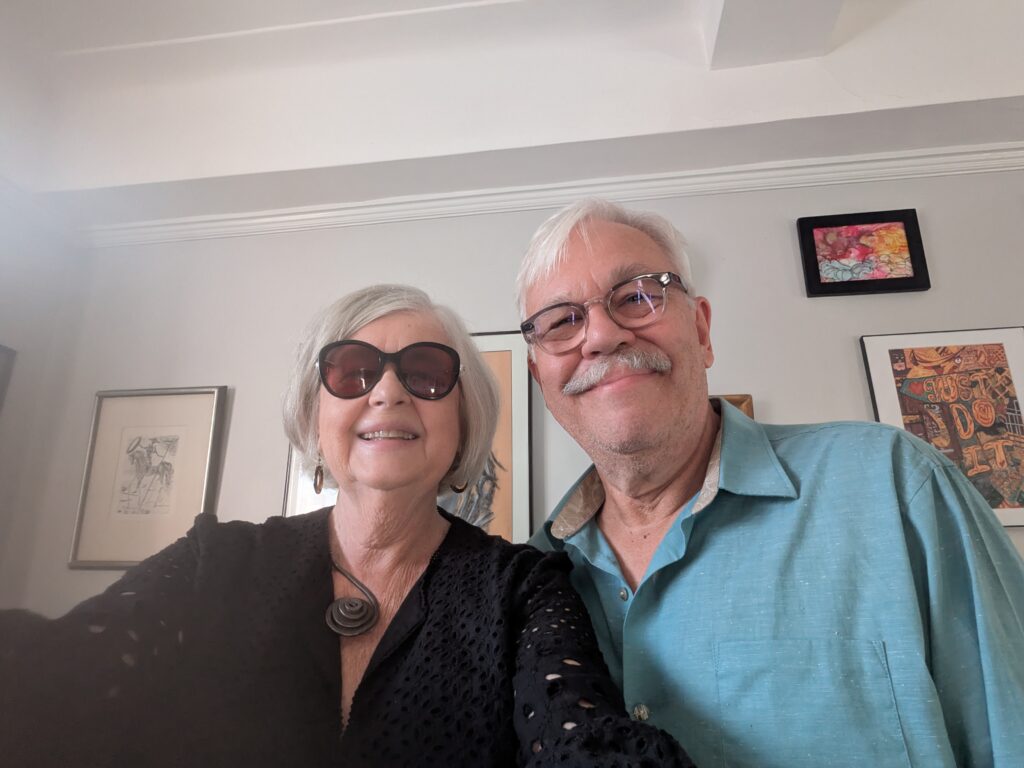
When Carla Sueta and her husband, Christer Andersson, arrived in Pittsburgh all the way from Asheville, North Carolina in September of 2025, they were stepping into the unknown. Neither had ever been to the city before, and the reason for their visit made the unfamiliar surroundings even more daunting.
Christer had been diagnosed with a colloid cyst, a rare, noncancerous tumor located in the brain. Though not malignant, its location made it dangerous, and over time it began to grow. As a retired physician, Carla knew the importance of expert care and sought out the best possible specialist. Their search led them to Pittsburgh and to Christer’s neurosurgeon at UPMC Presbyterian.
Because Christer could not fly, the journey itself was long and taxing. After driving to New Jersey and traveling by train from New York City, Carla and Christer arrived at Family House one evening, tired and unsure of what to expect. What they found instead was relief.
From the moment they checked in, Carla felt supported. The staff helped them find dinner after a long travel day, and their room offered a peaceful view of a nearby church, an unexpected comfort in an unfamiliar city. That first night set the tone for the weeks ahead: Family House was not just a place to stay, but a place to feel safe.
Christer’s surgery took place on September 16, and while the tumor was successfully removed, his recovery proved far more complicated than expected. He spent over a week in the ICU, followed by time on a hospital floor and then inpatient rehabilitation at UPMC Mercy. What was supposed to be a short stay in Pittsburgh stretched into nearly three weeks.
Throughout it all, Carla was on her own as a caregiver, which meant long days at the hospital, difficult decisions, and constant worry. Family House became her refuge. With its shuttle service, Carla never had to worry about navigating traffic or finding parking. Each morning began with a simple, grounding routine: a stop for a healthy breakfast at Family House, conversations with other guests in the Dining Room, then a ride to the hospital to be by her husband’s side.
In the evenings, she returned to a place that understood what she was carrying. There were always snacks waiting, therapy dogs offering quiet comfort, and staff ready to help with even the smallest concerns.
One of Carla’s favorite spaces was the Family House Alfred and Jeane Vallano Garden. During an unusually warm September, she spent many evenings there, sometimes reading, sometimes eating dinner alone but never feeling lonely. On her birthday, she treated herself to a simple celebration: cooking a steak and baked potato in the shared kitchen. It was a small moment of normalcy during an otherwise overwhelming time.
Family House also offered something Carla hadn’t anticipated: community. Over breakfast, she connected with other caregivers facing their own challenges. One friendship, in particular, has lasted beyond their stay—two retired physicians supporting one another through text messages long after leaving Pittsburgh. In a place where everyone understood stress, fear, and hope, Carla found connection and compassion.
As Christer slowly improved and transitioned to outpatient rehabilitation, Carla appreciated the flexibility Family House offered, from transportation options to extending her stay when needed. Before returning home, they even spent a couple of days back at Family House, allowing Christer time to adjust after weeks in the hospital.
By the time they left Pittsburgh on October 4, Carla realized just how much Family House had meant to her. She described it as a “cocoon”—a place where she didn’t have to worry about anything except her husband. “Compared to staying in a hotel or short-term rental, Family House offered something far more meaningful. In the middle of such an uncertain and emotional time, it gave us stability, genuine compassion, and a place where we truly felt at home,” Carla shared
Today, Carla and Christer are back in Asheville, celebrating steady progress in Christer’s recovery. He’s driving again and looking ahead to future travels. Carla remains deeply grateful for their experience and continues to support Family House, knowing firsthand the difference it makes.
For caregivers like Carla, Family House is more than a place to sleep. It is a safe harbor during one of life’s most difficult journeys—a place where kindness, comfort, and community make all the difference.
By donating to Family House, you help provide comfort, financial relief, and emotional support to patients and their caregivers when it is needed most.
Support Family House: familyhouse.org/donate